Below you can find a list of knowledge management books that I recommend. These are available through Amazon US, Canada, and UK. Although I do get a small commission on each knowledge management book sold, I did not simply add books to this shop. My contribution is that I have read, reviewed, and rated every book that I make available through this site. Moreover, I will never present a book that I find to be of inadequate quality. I will be adding new books on knowledge management and related subjects on an ongoing basis.
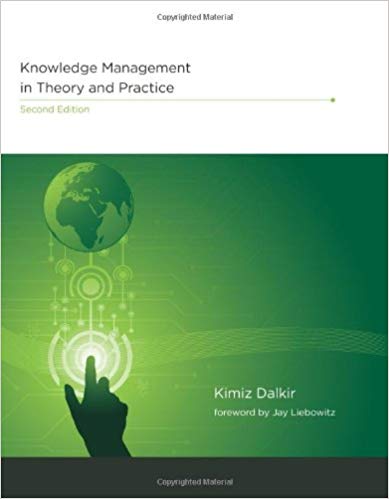
Knowledge Management in Theory and Practice
by Kimiz Dalkir, Jay Liebowitz (foreword), 2011
Buy from:


It is rare to find a book so strong in the practical as well as the theoretical, and for this reason this is currently my top recommended KM book. For instance, few KM books actually go into detail on how to conduct interviews, or list and explain at length the various techniques used for knowledge capture (e.g. learning histories, road maps, action learning, etc.). The information in this book goes beyond the typical case studies or personal experiences found in other texts; the reader is given many tools and instructed clearly on how to use them.
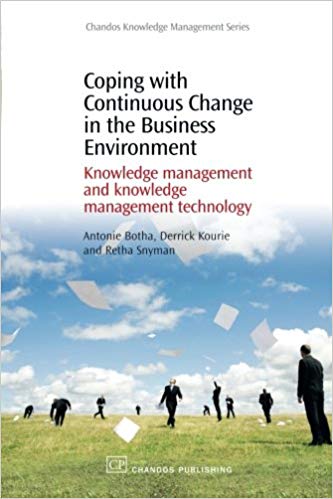
Coping With Continuous Change in the Business Environment: Knowledge Management and Knowledge Management Technology
by Derrick Kourie, Retha Snyman, and Antonie Botha (2008)
Buy from:
This is perhaps the best book I have read that combines knowledge management (KM) and KM systems (KMS). The book is divided into two sections, one dealing with KM in general and the other focusing on the technological aspect. Both are very comprehensive, with the theoretical section presenting an in-depth and very well organized overview of organizational learning, organizational culture, knowledge creation, KM, and so on. However, it is the section on technology that makes the book truly stand out, presenting an exhaustive look at all the major KMS categories and offering a level of detail that is rare in KM books.
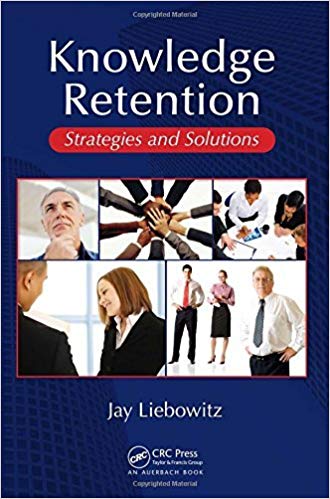
Knowledge Retention: Strategies and Solutions
by Jay Liebowitz (2009)
Buy from:
This is a book that deals with a very specific part of knowledge management (KM), namely knowledge retention (KR). KR is a discipline concerned with the managerial initiatives focused on assessing and retaining the most critical knowledge within the firm, particularly when faced with the potential loss of employees, e.g. due to retirement. It is written by one of the most recognized experts in the field of KM, and it is quite possibly the most important work within KR.
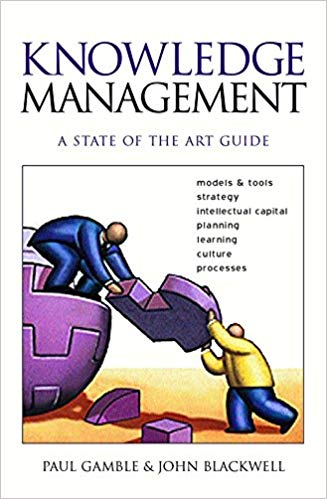
Knowledge Management
by Gamble & Blackwell (2001)
Buy from:

This remains one of my favourite KM books. The authors present a logical and methodical theoretical foundation, while including practical examples, stories, quotes, and so on throughout the entire book. The reader can therefore add a practical dimension to the theoretical concepts as he reads the book, or simply skip these extra paragraphs if he so wishes.
The strength of this book comes from its in-depth look at knowledge and KM, including its relationship to elements outside the boundaries of the firm, all the while maintaining a strong human focus without neglecting the effect of technology. The book also includes a questionnaire that companies can use to assess their KM aptitude.
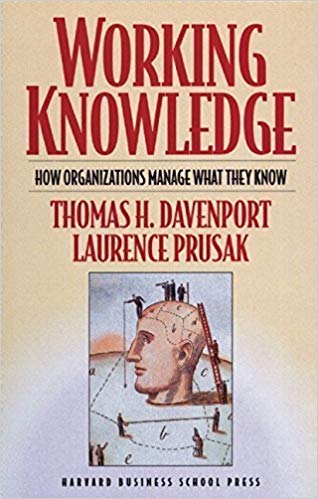
Working Knowledge
by Davenport & Prusak (2000)
 y
y
Buy from:
My Review (4/5)
This is one of the most influential and essential books in the field of KM. It also includes one of the best and most frequently used definitions of knowledge that I have come across. The only reason I did not give this book maximum marks is simply because by now some of the content is a bit outdated.
The book progresses from a breakdown and analysis of knowledge and the dynamics of knowledge markets; to concepts such as knowledge generation, codification, and transfer; before looking more closely at KM and KM projects.